
The most common advice about co-founder alignment focuses on equity splits, roles, and values. That’s important, but it misses the conflict that actually shows up first in most startups: the two of you are looking at the same product and seeing different things.
One founder sees what could be built. The other sees what needs to be sold. Both are right. And until you find a shared language for deciding what to build first, every roadmap conversation becomes a negotiation that neither side feels good about.
Co-founder alignment on product direction means agreeing not just on the destination — the product vision — but on how you decide what to build next. The most common breakdown happens between technical and commercial founders who have different mental models of what’s possible, how long things take, and what “ready” means. The fix isn’t better communication. It’s a shared framework for making product decisions anchored in customer value.
Table of Contents
Why Does Co-Founder Alignment Break Down Over Product Direction?
It rarely starts as a disagreement about the vision. Most founding teams are genuinely aligned on the big picture — the problem they’re solving, the market they’re going after, why they started this together. The breakdown happens one level down, when the vision has to become a plan.
At Data Solver, my co-founded B2B SaaS startup, the co-founder alignment challenges showed up most clearly in roadmap conversations and investor meetings. The commercial side of the team saw customer commitments that needed meeting and an investment timeline that demanded visible progress. The technical side saw complexity that couldn’t be shortcut — architectural decisions, infrastructure requirements, the reality of building software with a small team and limited resources.
Neither perspective was wrong. But they produced fundamentally different answers to the question “what should we build next?” — and without a shared framework for resolving that, every discussion became about why something wasn’t delivered rather than what the most valuable thing to deliver next would be.
This is a pattern I’ve seen repeatedly since. The co-founder alignment problem isn’t about disagreeing on where you’re going. It’s about disagreeing on the next step — and not having a shared way to decide.
What Causes the Expectation Mismatch Between Technical and Non-Technical Founders?
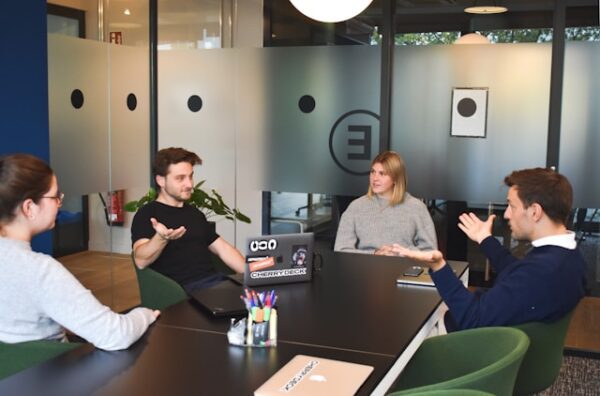
The gap is structural, not personal. Technical and non-technical founders carry genuinely different mental models of the same work, and those models produce different expectations about timelines, scope, and what “done” looks like.
A non-technical founder sees a wireframe and imagines a product that’s nearly ready to show customers. A technical founder sees the same wireframe and knows it’s a sketch — that the distance between that sketch and a working product involves decisions about architecture, data models, infrastructure, and testing that can’t be compressed just because the commercial timeline demands it. The gap between what a wireframe represents and what a clickable prototype actually demonstrates is significant, and founding teams that don’t make that distinction explicit will end up in conflict about timelines that are rooted in genuinely different understandings of what’s been built.
At Data Solver, this mismatch was real and persistent. The commercial expectations sometimes felt impossible to the technical side given the investment profile and timeframe. The technical constraints sometimes felt like resistance to the commercial side. We were both learning — neither of us had enough experience to manage expectations well, our own or each other’s. It was harder than it sounds when you describe it calmly after the fact.
The complication deepens when the development team is external. We were working with an outsourced team handling multiple projects to keep costs down. That meant every roadmap change was a significant exercise — there was no agility, no quick pivots. The lack of direct control over delivery made the co-founder alignment problem worse because we couldn’t just decide to change direction and have it happen the next day.
What Is the Minimum Slice of Value and Why Does It Matter for Co-Founder Alignment?
The single most useful question for co-founder alignment on product direction is: what is the smallest thing we can deliver that solves a real customer problem?
That question — the minimum slice of value — forces both the technical and commercial perspectives into the same frame. The technical founder has to think commercially: what’s the smallest thing a customer would actually use? The commercial founder has to think technically: what does it actually take to build this properly?
At Data Solver, we didn’t define this clearly enough early on. Instead of anchoring on the core function and pain we were solving for the customer, we argued about features, look and feel, and minor value points at the expense of major ones. We kept trying to do too much in too small a timeframe. The conversations were about what was and wasn’t included rather than what the customer actually needed to accomplish.
The problem was that we were thinking about the product rather than the job the customer needed done. We were fixated on features and aesthetics when we should have been asking: what is the function? What is the pain we are solving? Can the customer get the core job done using what we’ve built?
Looking back, I recognise that applying standard product principles — ideal customer profile, value proposition, and a jobs-to-be-done framework — would have significantly improved how we made decisions together. Not because those frameworks are magic, but because they provide a shared language that takes the decision out of “your opinion vs my opinion” and puts it into “what does the customer need to accomplish?”
That shared language is what co-founder alignment actually requires. Without it, every product decision becomes a negotiation between two valid but competing perspectives. With it, the question shifts from “what do we each want to build” to “what does the customer need us to build first?”
How Do You Stop Roadmap Conversations From Becoming Conflicts?
The roadmap is where co-founder alignment either holds or fractures. It’s the artefact that turns the abstract vision into concrete commitments — and concrete commitments are where disagreements become real.
The pattern I experienced at Data Solver was this: we would agree on a roadmap, start executing, and then something would change — a customer conversation revealing a new opportunity, an investor expecting a different demo, a technical constraint that shifted the timeline. The response from the commercial side was “why are we changing what we agreed?” The response from the technical side was “this is the reality of building software.” Both positions were understandable. Neither helped.
The shift that I now recognise was needed — though we didn’t fully make it at the time — was moving from a project management mindset to a product management mindset. Project management asks: are we delivering what we planned? Product management asks: are we delivering the most valuable thing we could be delivering right now? The first question treats the roadmap as a commitment. The second treats it as a hypothesis that updates as you learn.
At Data Solver, we stayed too long in project management mode — focused on whether we were hitting the plan rather than whether the plan was still the right one. That’s a common pattern for first-time founders, and it took subsequent experience in product leadership roles for me to see what was missing.
For founders navigating this: anchor every roadmap discussion in the customer outcome, not the feature list. When a change is proposed, the question shouldn’t be “why are we deviating from the plan?” but “does this get us to the customer outcome faster or slower?” That reframes the conversation from blame (who changed the plan) to judgment (is this change worth making).
This is easier to describe than to do, especially in the early days when everything feels urgent and the pressure to show progress is enormous. But the alternative — treating every roadmap change as a co-founder alignment failure — is worse, because it creates an environment where adaptation feels like betrayal rather than learning.
When Is Co-Founder Misalignment a Sign of a Deeper Problem?
Not every disagreement about product direction is a co-founder alignment issue. Some of it is the normal friction of two intelligent people seeing the same situation from different angles. That friction, when handled well, produces better decisions than either perspective would alone.
The signal that something deeper is wrong isn’t disagreement — it’s disagreement that keeps returning to the same place without resolution. If every roadmap conversation becomes the same argument, the issue isn’t the roadmap. It’s that the two founders have fundamentally different views of what the company should be, and the product decisions are just where that difference becomes visible.
As Paul Graham has noted, you can change your idea easily, but changing your co-founders is hard. That’s precisely why co-founder alignment on product direction matters so much in the early stages. Small misalignments compound. A disagreement about what to build in month three becomes a fundamental conflict about company direction by month twelve if the underlying gap isn’t addressed.
The honest truth is that some co-founder alignment problems aren’t solvable through better frameworks or more structured conversations. Some reflect a genuine mismatch in how two people think about risk, ambition, or what the company should prioritise. Recognising the difference between productive tension (we disagree on the route but share the destination) and fundamental misalignment (we’re heading to different destinations) is one of the more important judgment calls a founder has to make.
What Would You Do Differently as a Second-Time Founder?
Looking back at Data Solver, the co-founder alignment challenges we experienced weren’t unusual. Most first-time founding teams go through some version of the same thing. But knowing what I know now, three things would change.
First, define the minimum slice of value before writing the roadmap. Agree on the one customer job the product needs to enable before arguing about features, aesthetics, or technical architecture. That agreement becomes the anchor for every subsequent decision.
Second, adopt a jobs-to-be-done lens from day one. The question “what is the customer trying to accomplish?” is a better foundation for co-founder alignment than “what should we build?” It takes the conversation out of competing opinions and into shared evidence.
Third, treat the roadmap as a learning tool, not a contract. Every roadmap change should be evaluated against the product vision: does this get us closer to the destination? If yes, the change is an improvement, not a deviation. If the product vision itself is under question, that’s a different and more serious conversation — one that deserves to be had explicitly rather than fought out through roadmap arguments.
The co-founder alignment work never stops. But it gets significantly easier when both founders share a language for making product decisions — one rooted in customer value rather than competing instincts about what to build next.
Frequently Asked Questions
How do you align co-founders who have different technical backgrounds?
Start by making the expectation gap explicit. Technical and non-technical founders carry different mental models of what’s possible in a given timeframe. Agreeing on a shared definition of the minimum slice of value — the smallest deliverable that solves a real customer problem — gives both perspectives a common anchor for decision-making.
What is the biggest cause of co-founder conflict in startups?
On product direction specifically, the biggest cause is the absence of a shared framework for deciding what to build next. Without one, every product decision becomes a negotiation between competing perspectives. Adopting a jobs-to-be-done lens or anchoring decisions in the ideal customer profile gives co-founders a shared language that reduces conflict.
Should co-founders always agree on the product roadmap?
Not necessarily — healthy disagreement often produces better decisions. The issue isn’t whether co-founders disagree, but whether they have a shared way to resolve disagreements. If the same argument keeps recurring without resolution, the problem is likely deeper than the roadmap itself.
How do you tell the difference between healthy tension and fundamental misalignment?
Healthy tension is disagreement about the route — which feature to prioritise, which market to enter first, how fast to move. Fundamental misalignment is disagreement about the destination — what the company should be, who it should serve, what success looks like. If product roadmap arguments keep returning to the same unresolved place, the issue may be misaligned visions rather than misaligned plans.
When should co-founders bring in a product manager to help with alignment?
When the product decisions have grown complex enough that neither founder can hold the full picture — customer needs, technical constraints, commercial priorities, and delivery timelines — without dedicated focus. A product manager provides the shared language and structured decision-making that co-founders often struggle to create while also running the business.
How do you handle co-founder alignment when using an external development team?
External teams add friction to every roadmap change, making co-founder alignment more critical, not less. Every shift in direction has a cost — in time, in money, and in the relationship with the development partner. This makes it even more important to agree on the minimum slice of value upfront and resist the temptation to change course without both founders explicitly agreeing that the change is worth the cost.