
How to Get Stakeholder Alignment in a Startup: One of the most persistent challenges across every venture and leadership role I’ve been in isn’t about having the wrong idea. It’s about assuming everyone understands the right one.
Stakeholder alignment failures rarely look like disagreement. They look like a product that gets built correctly but misses what the sales team needed to sell it. A co-founder who seemed on board until the first major decision. An investor who backed the idea but had a different product in their head than the one being built. A board conversation that surfaces fundamental misalignment at exactly the point when it’s most expensive to address.
The common thread is almost never a communication breakdown in the obvious sense. It’s something subtler — the gap between what people say and what they mean, between what founders hear and what stakeholders actually need, between assumed agreement and genuine buy-in.
The answer to the question – how to get stakeholder alignment in a startup isn’t about better presentations or more thorough documents. It’s about when and how you involve people — and whether you give them something real enough to react to before the work is done.
What Is Stakeholder Alignment and Why Does It Matter?
Stakeholder alignment in a startup means that the people who need to build, sell, back, or use a product share a genuine understanding of what it is, what it’s for, and what success looks like. Not a polite agreement in a meeting — a real, shared mental model that holds up when decisions get hard and resources get tight.
For a startup founder, misalignment is one of the most expensive problems you can have — not because it causes conflict, but because it causes invisible conflict. Work proceeds in slightly different directions. Assumptions harden into decisions. By the time the gap surfaces, it’s embedded in something that’s costly to undo.
Table of Contents
Why Is Stakeholder Alignment So Hard in a Startup?
The difficulty isn’t usually disagreement. It’s interpretation.
When stakeholders say they understand something, they mean they’ve formed a mental model of it. But that mental model is shaped by their own experience, their own technical background, and their own assumptions about what the product should be. Two people can leave the same conversation believing they’re aligned while holding fundamentally different pictures of what’s being built.

This is compounded by the fact that stakeholders — particularly those without a technical or product background — often struggle to articulate precisely what they mean. They know what they want the product to feel like or do commercially, but translating that into specific requirements is hard. Documents and diagrams can only take this so far. Something gets lost when a nuanced stakeholder conversation is translated into written requirements — the inflections, the hesitations, the “what I really mean is” moments that only surface in a real conversation.
The practical implication: never assume that a stakeholder who hasn’t objected has agreed. Agreement requires a shared understanding of something specific — not just an absence of pushback on something abstract.
What Is the Hardest Alignment Problem for Founders?
Getting stakeholder alignment right in a startup is hardest when the people involved don’t share a common language about what’s being built. From experience across multiple ventures, the hardest alignment is consistently between the product or development team and the sales team or investors — particularly when they don’t share a technical background.
The expectation gap runs in both directions. The development team builds to a specification. The sales team sells to a customer promise. When those two things diverge — and they diverge more often than founders expect — the result is a product the development team built correctly but the sales team can’t sell, or a customer promise the sales team made that the product can’t fulfil.
The most expensive version of this mistake is waiting until a product is built to discover the misalignment. By that point, the development investment has been made, the sales pipeline has been built around a different promise, and fixing the gap means either rebuilding something or resetting customer expectations — both costly.
Involve sales and marketing early: The antidote is concurrent involvement. Sales teams and investors should be part of the product conversation while it’s still forming — not to make product decisions, but to stress-test the commercial assumptions behind them. What they tell you about how they’d sell it, what objections they’re anticipating, and what customers are already asking for is information the product needs before it’s built, not after. (Ref: Lean startup methodology)
Why Do Individual Conversations Work Better Than Group Sessions?
There’s a persistent assumption that the best way to get stakeholder alignment is to get everyone in a room together for a brainstorming session. In practice, this rarely produces the quality of input the situation needs.
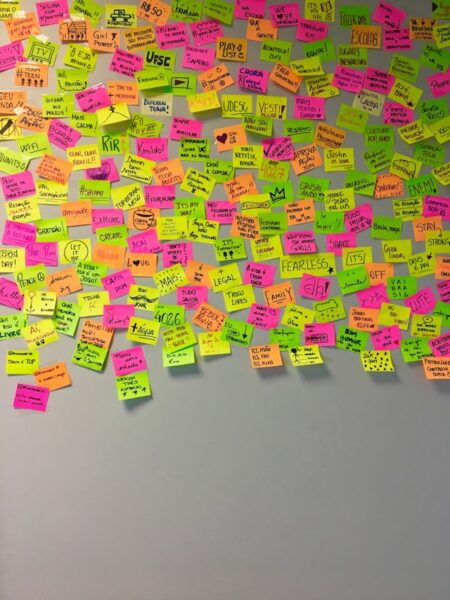
Group sessions have a specific failure mode: they flatten individual thinking. Senior stakeholders in a room together tend to converge quickly — either toward the most senior voice, or toward whatever seems like the path of least resistance. The nuanced, exploratory thinking that actually surfaces genuine concerns and alternative perspectives doesn’t happen in a group setting. It happens one-to-one, where someone has space to think out loud without the social dynamics of a group. (Ref: Groupthink flattens individual thinking)
Focus on individual vs group conversations: Individual conversations before any group session consistently produce better outcomes for three reasons. First, stakeholders say things one-to-one that they won’t say in a group — the concerns they’re uncertain about, the questions they think might sound uninformed, the directions they’d prefer but haven’t committed to yet.
Second, you can ask the follow-up questions that a group setting doesn’t allow — the “what do you mean by that” and “what would need to be true for you to be confident” questions that turn vague preferences into specific input. Third, by the time a group conversation happens, you’ve already mapped the landscape of opinion — you know where the alignment is genuine and where the gaps are, which means you can structure the group conversation to resolve specific conflicts rather than surface them for the first time.
Brainstorming sessions have their place — particularly when there are known conflicting opinions that need to be resolved in a room together. But they work best as a synthesis step after individual conversations have done the preparatory work, not as a substitute for them.
How Does Involving Stakeholders in Creation Rather Than Review Change the Outcome?
The most valuable shift a founder can make in how they approach stakeholder alignment is moving people from the review stage to the creation stage. i.e address the question – how to get stakeholder alignment in a startup?
When a stakeholder is shown something finished — a document, a deck, a completed design — their instinct is to evaluate it. Feedback comes as a reaction to something that already exists rather than as a contribution to something still forming. That feedback is harder to incorporate meaningfully, and the stakeholder is left with the sense that their input shaped the edges rather than the direction.
When a stakeholder is involved while something is still being created — when they can see a rough prototype and point at a specific screen and say “this flow doesn’t match how our customers think about this problem” — the conversation is fundamentally different. Their input is formative rather than corrective. They feel heard rather than consulted. And the output reflects a genuine synthesis of the thinking in the room rather than one person’s vision with comments appended.
Involve them early: This is why involving stakeholders in an early prototype — however rough — consistently produces better alignment than presenting them with something polished later. The roughness isn’t a problem. It’s an invitation to contribute.
How Do Prototypes Change the Stakeholder Alignment Conversation?
A clickable prototype changes the quality of stakeholder input in a specific and practical way: it gives people something concrete enough to disagree with specifically.
Abstract descriptions of a product produce abstract feedback. “I’m not sure about the user experience” or “I think the commercial model needs work” are hard to act on. “This screen doesn’t reflect how a customer would actually approach this decision” or “the flow assumes the user already knows what they want — our customers don’t” is something you can do something with.
A prototype surfaces that specificity early — before engineering has committed to an approach, before design has invested in a direction, before sales has built a pipeline around a promise. The feedback is cheaper to act on at that stage than at any point that follows.
Build a prototype with them: create an early prototype, share it with key stakeholders individually before any group review, structure the individual conversations around specific questions rather than general impressions, and incorporate what you hear before the prototype reaches a group setting. By the time it does, the major gaps will already have been addressed — and the group conversation can focus on refinement rather than re-direction.
For a detailed guide to creating prototypes that anchor this kind of conversation, read: What Is a Clickable Prototype and When Should a Founder Use One?
What Is the Founder Blind Spot That Causes Most Alignment Problems?
The most common stakeholder alignment failure in a startup isn’t a communication breakdown — it’s assumed agreement.
Founders are close to their ideas. They’ve thought about them from every angle, stress-tested them internally, and reached a point of genuine conviction. That conviction is necessary — without it, you can’t build anything. But it creates a specific blind spot: the assumption that the clarity in your head has been transferred to the people around you.
It hasn’t. Not automatically. Not without specific, deliberate effort to verify it.
Verify your assumptions, playback agreements: after any conversation where you believe alignment has been reached, ask the other person to describe back to you what they understand has been agreed. Not to test them — to verify your own assumption. The gaps that surface in that moment are the ones that would otherwise have become expensive later.
Investors, co-founders, early hires — all of them will tell you what they think you want to hear in a meeting, not always because they’re being dishonest, but because they’ve formed an impression and don’t yet know enough to question it. The founder’s job is to create the conditions where the questions surface early. That means sharing work in progress, inviting genuine challenge, and treating the absence of objection as a prompt to probe further — not as confirmation of agreement.
Frequently Asked Questions
What is stakeholder alignment and why does it matter for startups?
Stakeholder alignment means that the people who need to build, sell, back, or use a product share a genuine, specific understanding of what it is and what success looks like. For startups it matters because misalignment is invisible until it’s expensive — work proceeds in slightly different directions, assumptions harden into decisions, and by the time the gap surfaces it’s embedded in something costly to undo. Getting alignment right early is one of the highest-leverage things a founder can do.
How do you get stakeholder alignment in a startup?
The most effective approach combines three things: individual conversations before group ones, involvement at the creation stage rather than the review stage, and something concrete — a prototype or early visual — that gives stakeholders something specific enough to react to rather than something abstract to evaluate. Alignment reached around something tangible is more durable than alignment reached around a description.
How do you align co-founders on product direction?
Individual conversations that create space for genuine disagreement are more valuable than group sessions that produce superficial consensus. The specific question to ask a co-founder is not “do you agree with this direction” but “what would need to be true for you to be confident in this direction” — that question surfaces the real concerns rather than the polite ones. An early prototype that both co-founders can react to specifically is more effective than a document both co-founders can interpret differently.
What do investors look for when it comes to founder and team alignment?
Investors are evaluating whether the founding team has a shared, specific understanding of what they’re building and why — not whether they agree on everything, but whether disagreements are productive and well-managed. The most concerning signal is a team that presents false unanimity or where one founder is clearly driving alignment through authority rather than genuine agreement. Demonstrating that you’ve involved key team members in the creation of the product vision — not just informed them of it — is a more credible signal of alignment than a polished pitch that everyone has memorised.
Why do group brainstorming sessions often fail to produce genuine alignment?
Group sessions flatten individual thinking. Senior stakeholders in a room converge quickly — toward the most senior voice or the path of least resistance — and the nuanced concerns that would surface in a one-to-one conversation stay unspoken. Brainstorming works best as a synthesis step after individual conversations have mapped the landscape of opinion, not as a substitute for them.
How do you know when stakeholder alignment is genuine versus assumed?
The simplest check: after any conversation where you believe alignment has been reached, ask the other person to describe back to you what they understand has been agreed. The gaps that surface in that moment are the ones that would otherwise become expensive later. Genuine alignment shows up in the specific language people use — they describe the product, the customer, and the outcome in terms that match yours. Assumed alignment shows up in vague affirmations that could mean several different things.
What is the difference between stakeholder alignment and stakeholder management?
Stakeholder alignment is about ensuring you are working on the right things — the priorities that matter most to the business and its stakeholders rather than the ones that feel urgent but aren’t truly important. It’s easy for a founding team to get pulled into building features or solving problems that don’t reflect what stakeholders actually need, and alignment is the discipline that prevents that drift. The Eisenhower distinction between urgent and important applies directly here — alignment keeps you focused on what’s important, not just what’s pressing.
Stakeholder management is what comes after alignment is established. It’s the ongoing process of keeping stakeholders informed about progress, communicating changes early, and ensuring nobody is surprised by what’s coming. Good stakeholder management means that decisions made after alignment are visible to the people affected by them — so that the shared understanding built early doesn’t erode as the work evolves.
In practice: alignment answers the question “are we working on the right things?” Management answers “does everyone know what’s happening?” Both matter, but alignment comes first — there’s no point managing stakeholders toward the wrong outcome.
For a practical guide to creating the prototypes that make stakeholder conversations more concrete, read: What Is a Clickable Prototype and When Should a Founder Use One?
For the full approach to getting investor buy-in through visual and interactive formats, read: How to Get Investor Buy-In for Your Product Vision (Without Long Documents)
For a practical guide to writing briefs that create alignment before work begins, read: How to Write a Product Brief That Actually Gets Results