
How to use time effectively? This is a detailed article about using the time to give the best results you want. Naturally, time is one of the scarcest resources. Also, time is the one thing that is distributed uniformly across all people in this world! Not all of us are born with the same riches, facilities, opportunities, features, environment and so on. If there is something in the world that unites us all together and keeps all discrimination at bay, it is time.
What makes the difference then? Is it our internal tuning? Is it how we react, is it how we utilize our time, is it how efficient we are, is it how best and how fast we can complete things without compromising on quality? Looks like we are getting somewhere here. Let us see how best we could utilize our time so that we get the best out of a situation. We looked through a few management books but finally realized things can be as basic as the following:
How to use time effectively?
In this article, we talk about the 5 key tips on how to use time effectively. If you’re interested, I’d recommend reading through our presentation on time management for a detailed explanation. The main aspect of time management is to acknowledge the limitation of time. Once we know that our time is limited, we are forced to use it in the most effective manner to give us the highest chance of success. It is about being realistic and ensuring that we give enough time for things that matter the most to us.
Having said that, there are multiple tricks to use time effectively. Using some of these can give us better control over time, rather than mindlessly focusing on things that come our way. The most common thief of time management is the mindless execution of tasks and constantly finding ourselves busy. Here are some tips on how to use time effectively.
Table of Contents
Organize Your priorities
The first thing on how to use time effectively is also the most prominent one. It is about your priorities that define time available for things that matter the most to you. It is perhaps the most boring tip, but the truth is, we don’t know how much time we have unless we know all the things that we have to do. Our mind plays tricks on us, it gives an indication that some of the tasks are easier to do and will take less time later, but the truth is, objectively speaking, these things take the amount of time they deserve. Any shortcuts we try to create will only end up compromising the quality of work we do.
Make a List!
A list is a great starting point to know everything that we have to do. Once you make a list, make sure that there is a timeline associated to it. i.e. the list needs to have deadlines for specific tasks. Once you know that, you have an idea of what you need to finish in a day, in a week vs. a month. Once you have that list, try to organize it in the most visual way possible so that it gives you an indication of items that are important vs. the items that are urgent.
The most common culprit to use time effectively is that the urgent items take over the important items. Conscious time management demands that we spare enough time for things that are most important to us.
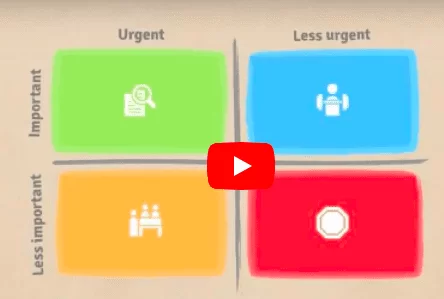
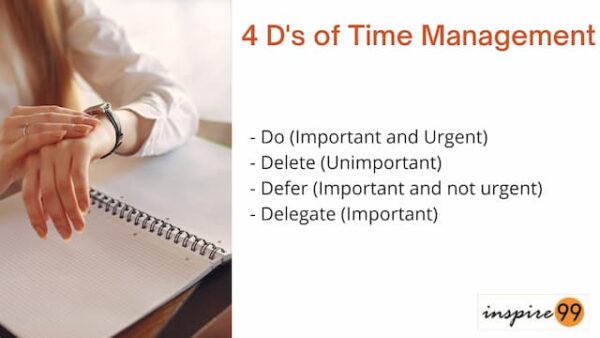
You can follow numerous frameworks, but the best one I’ve found is the Eisenhower Matrix. This helps you to differentiate between the urgent and important items on your list. It is a clear pictorial representation of which items start stealing your time. Once you create the Eisenhower matrix and populate all the work tasks, you can clearly start identifying which ones demand most attention vs. the ones that you can either delegate or decline working on.
Grouping Projects
It might be an outdated concept, but there are tasks that might not need your full concentration – for such tasks, I would recommend grouping a few activities together. These can be about listening to podcasts as you workout or music for entertainment.
You might also listen to an audiobook while commuting on train etc. There are multiple ways that you can use the time effectively to get your results. If you badly want something, you have to be creative with your time. And sometimes, multi-tasking does help in the process.
Procrastination
Procrastination is the thief of time. Procrastination gives a false impression that there is more time tomorrow. It makes us feel that time is expandable. The worst part is procrastination tells us a lie and makes us feel better in the short term. However, it always finds a way to bite us back in the long run. No matter how tempting it is to procrastinate and postpone things, get it right at the start. If you are not actively aggressive about it, this can grow into a big monster and eat up your time management.
As the deadline gets closer, there’s a huge amount of pressure to finish things in time, hence we start taking shortcuts. The same things which seemed easy will immediately start feeling difficult, and we start compromising the quality of work. In any case, even though procrastination makes you feel good in the short term, the impact of it can be quite catastrophic. (The effects of procrastination)

I know the point I am driving here is very small and very easy to overlook as well. But when I did it, I realized that it is a lot easier to finish things off than procrastinate. It did make sense to a certain extent to do the easy things first. Though it was not the biggest completion or achievement, it still took a lot of things off the list which was a huge load off the back. There are some simple tricks to avoid procrastination which can go a long way in balancing time available for yourself.
Identify your best working time
For me, it did take a long time to realize that I was at my best in the mornings, the energy was at its best, the efficiency and the way I handled things was much faster than any time of the day. The noon was one of the most torrid times. Even then, I used to get up at 9 in the morning and be all stressed out about things.
Thought I would revamp the schedule a little, realized that the day had a lot more time than it used to. Now I find a little more time to meet people, complete my work and also organize things better. Efficient Work doesn’t necessarily mean spending 10 hrs at the office. It means finishing off the work in a much shorter duration so that we have more time for ourselves and for things which are equally if not more important.
Take Breaks
It might sound counterproductive when we talk about how to use time effectively to talk about breaks. But they are very helpful in keeping you sane.
It takes me back to the days when I was an engineer at my first job. The most challenging time for me used to be the afternoons, right after lunch! I was smart- or so I told myself! I used to force myself to work, only to realize that I would be stuck at the same line of code for hours together and the reasons being as small as I had made a spelling error!
But trying something as small as a 15-minute nap made a world of difference. The lesson was, there is no point in trying to force ourselves beyond the zone where we aren’t ready. It makes a lot more sense to take the rhythmic breaks and mix it up well.
We are not here just to win a trophy, the bigger picture is still us and our well being over everything else. Every other urgency is our perception of it. On the bigger picture,, probably these things and deadlines might not matter at all :)
How can I use my time effectively http://t.co/SJlqRCOQnW