
Welcome to the Time Management PPT, a comprehensive guide designed to provide you with essential strategies and practical tips for managing your time more effectively. In today’s fast-paced world, many of us grapple with packed schedules and endless task lists that often feel overwhelming.
The pressure of deadlines and the expectations of others can make it challenging to find a balance between personal and professional responsibilities. This presentation aims to empower you with actionable insights that will help you take charge of your time, enabling you to focus on what truly matters.
By understanding the principles and techniques of time management, you can cultivate a sense of satisfaction and ease, allowing creativity and productivity to flourish in your daily life. Whether you’re looking to improve your personal efficiency, enhance team collaboration, or simply create more space for relaxation, this Time Management PPT is a valuable resource for anyone seeking to optimise their time.
Table of Contents
Time Management PPT
This Time Management PPT is a collection of simple yet powerful tips and hacks on how to manage time effectively. While creating this presentation, we’ve kept in mind that most of us already have packed schedules and endless task lists that never seem to get completed. On top of that, there’s the constant pressure of deadlines and the expectations of people who keep pushing us for progress.
These tasks may be personal, professional, or a mix of both — and as in most of our lives, it’s rarely easy to draw a neat line between work and personal time. But if we can find a harmonious balance between the two, we can at least say that we’re winning at time management.
This Time Management PowerPoint presentation aims to highlight key ideas and practical insights on how we can take charge of our time and stay ahead in our busy lives. It’s not about creating more hours in the day — since none of us can magically do that — but about being mindful and deliberate with the time we already have.
Time management is not just about efficiency or productivity; it’s also about the sense of comfort and satisfaction that comes from knowing we have enough time to do the things that matter most. It’s equally about ensuring we have moments of rest and peace, where creativity can flow freely.
Please feel free to use this time management ppt in your own way — whether for personal reflection, training sessions, or discussions — and if possible, kindly credit us where you can. It helps us keep this website and our work alive so we can continue sharing useful resources with you.
Download link: https://www.slideshare.net/spidyvinay/time-management-10-tricks-for-absolute-mastery
Understanding Time Management
What is time management? Simply put – it is about managing the amount of time that we have. Invariably, the definition of time management implies that we don’t have enough time during the day and we have to make the best of what we have. Although a part of it is true, I’d also like to argue that we don’t have enough time because we are doing rubbish tasks that are either not important or we are mindlessly invested in them. (Time Management is Life Management – Brief Analysis)
Understanding time management begins with being mindful about the tasks we pick. When we choose consciously, the act of time management becomes a simple exercise where we decide on the priority of things and actually have fun with what we are doing — without being stressed about what’s left incomplete.
Understanding time management also means accepting that we work within a limitation. This limitation is not a curse but a gift — a reminder to focus on what truly matters to us. There are numerous frameworks that help us see where we spend our time the most. One of the most valuable frameworks I’ve seen is the Eisenhower Matrix, which visually represents how we allocate our time.
The trick lies in ensuring that we spend time on things that are both important and urgent. The urgent tasks sometimes act as a time sink — they give us the impression that they are important while quietly stealing time away from priorities that can have a real impact on us.
So, while we spend time understanding time management, it’s worth listening to that quiet inner call that tells us what truly matters. Some other things can always be treated differently — postponed, procrastinated, or delegated — to make room for what truly counts.
Key Principles of Time Management
There are a few key principles of time management that help us stay true to time. The priority in time management is to ensure that we have time for things that are most important to us. We will not be able to stretch time, but the point is to mindfully use this time to get the best results. The key principles of time management are:
Awareness
It starts with us being aware of all the tasks that are in front of us. Sometimes, we tend to think that it is manageable because we don’t have the full picture of things in front of us. The full visibility and awareness make us understand and be honest about what we are capable of. The most common thief of time management is either over-optimism or pessimism that gives a false picture of time. This can be addressed by following the key principles of time management, which start with awareness.
Prioritisation
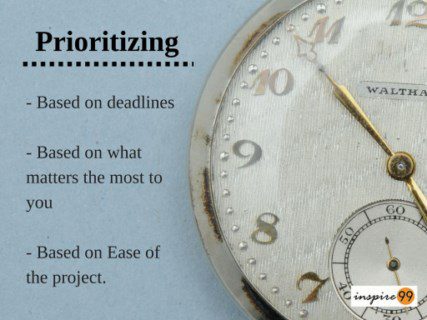
Once we are aware of the list of items in front of us, we ought to be aware of their relative priority. If everything is a priority, nothing gets done. That’s the truth, and most of us struggle with coming to terms with this truth because we don’t like saying no. But this is as real as things get – there’s no point in creating false promises just so that we can feel better. The priorities help us understand where and how we should split our time most effectively.
Planning and Procrastination
Everyone knows that procrastination is the thief of time. It creates a false impression about the complexity of a task and the hope that it is going to be easier with time. In reality, it only increases stress because we still have a lot of unfinished tasks to do.

Planning is one of the key principles of time management because it can give a realistic estimate of what’s possible. Now there are various ways to plan delivery and time – but the best way to do it is iteratively so that we understand how our plans are and we can continue getting better at them. There needs to be time for flexibility, changes in times, and other priorities in the plan, but planning is the first step in getting things done.

Time Management Techniques
Now with a good background in the key principles of time management, let’s dive into time management techniques. We can use multiple frameworks and approaches for effective time management techniques. You can choose a specific style depending on your strengths and approaches. There’s no one-size-fits-all approach when it comes to time management techniques. The most famous time management techniques are:
Eisenhower Matrix
This is a great tool to give visibility of your tasks. It can be used to map your everyday tasks or weekly or monthly. There are various ways to use this framework, but the main thing is to ensure that we have a good idea of the priority of tasks. Unless we know what’s important and objectively measure it, this technique will fail.
4Ds of Time Management
This is a brilliant tool for people who want to do everything themselves. In the game of time management, the trick is to not do everything yourself. But the main task is to get things done to an acceptable quality. It will demand that you delegate a few things and pass them on to someone else so that you can focus on other things. Unless you do this well, you end up becoming a micromanager who will always struggle to finish things. (4 Ds of time management for prioritisation)
Pomodoro Technique
This technique focuses on taking effective breaks so that you don’t burn out or overextend on one single task. It involves working in short bursts (typically 25 minutes) followed by a 5-minute break. After completing four “Pomodoros,” you take a longer break (15-30 minutes). This helps people who struggle to take a break and are stuck when they get a headache from concentrating too long.
Time Blocking
This is for people who can context-switch effectively and manage the time to the letter. These time blocks are for specific activities and cannot be repurposed for something else. Managing a good quality of time blocking helps create time management discipline for someone struggling to finish tasks or ignoring a few from their list.
SMART Goals
Setting SMART (Specific, Measurable, Achievable, Relevant, Time-bound) goals makes you plan better. It is a key tenet of planning for time management and is used as a principle to ensure that you are creating good plans and improving them as you go along. (https://www.ucop.edu/local-human-resources/_files/performance-appraisal/How+to+write+SMART+Goals+v2.pdf)
Batch Processing
This is more of a hack for time management. Batch processing or working in chunks helps you group tasks together so that you can benefit from focus and be able to finish things off while doing something else. In some cases, it is also multitasking that enables you to get better at your time management list.
Prioritising Tasks for time management
This is everything – in fact, it is at the heart of time management to prioritise tasks for time management effectively. We must find a way and create a mechanism that’s scalable and objective enough for us to follow. If we don’t do that, we continue to mindlessly do tasks that we like while compromising what’s needed for time management.
Again, there are numerous ways to help us prioritise tasks for time management effectively. It is just a matter of picking something that works best for us and using it regularly. The principles themselves are easy, but it is the execution where this matters the most.
Some of the popular methods to prioritise tasks for time management effectively are:
Weighted Time Management
This is a simple yet powerful mechanism where we can allocate a certain weight or multiplier to a task. We can do this for all the tasks in our list and then order the list in an Excel sheet. It orders the items based on a score, and we can pick the one that works best for us. However, the one thing to be aware of is that although this framework brings objectivity to the approach, it will not help you deal with subjective decision-making. So, you will always have to find a way to allocate that. However, this is a powerful indicator list of where to start and highlights items of highest impact.
ABC Method
In this framework, you assign a letter to each task based on its importance:
- A: High priority tasks that must be done.
- B: Medium priority tasks that are important but not urgent.
- C: Low priority tasks that can be done later or delegated.
MoSCoW Method
I have used this method effectively for product management to manage priorities for time. It shows the distinction between important versus nice-to-haves for simple prioritisation matrices.
- Must have: Critical tasks that must be completed.
- Should have: Important tasks that add value but are not critical.
- Could have: Nice-to-have tasks that can enhance the outcome.
- Won’t have: Tasks that are not necessary for the current timeframe.
Pareto Principle (80/20 Rule)
This principle suggests that 80% of results come from 20% of efforts. Focus on identifying and prioritising tasks for time management that will yield the most significant results for your time invested. The Pareto rule can be a powerful indicator in prioritisation and managing time effectively. If we can identify our high-impact areas and find a way to spend more time there, that gives us the best chance of success.
Productivity Hacks in Time Management PPT
This is the last section of this article on Productivity Hacks in Time Management PPT. It won’t be fair if I give you all these theoretical details without a few practical hacks that can help with time management. You may be using some of these already, but they have personally helped me a lot to get the most out of my time.
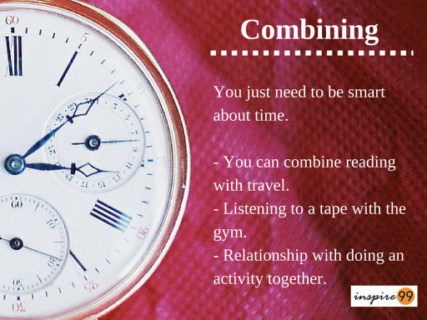
Grouping Similar Tasks
This can work very well if we can combine complex tasks with easy tasks. I used to do homework while watching TV and then improvised it with watching TV on mute. Although the quality of work was not great, it still was fun to do the boring jobs. I do the same with the gym now – working out while listening to audiobooks makes the gym tolerable and less boring.

I know there’s a school of thought that says multitasking is bad. But there’s a problem applying all rules unilaterally. This is supposed to be fun, and not everything needs to be done at the best quality.
Use the Two-Minute Rule

If a task takes two minutes or less to complete, do it immediately. This prevents procrastination, which later adds significant pressure. It is akin to saying—do the simple tasks first. They will take off pressure from you because it is one more thing crossed off the list, and you don’t have to worry about it later. It also prevents the procrastination worry that is a list of things that keeps piling up and thus causes a black hole of tasks that never seem to end.
Say NO
This is not a hack but a beautiful rule. We are compelled to say yes to everything, but saying no is very powerful. We can gain a lot by saying no to things that are less important or valuable. Time management can be a selfish exercise at times, and you are right to use it that way. The more you are careful about managing time and saying no, the better it will be for you both in the short and long term.
Procrastination is the thief of time! It slowly adds up the pressure and creates the illusion that you’ll have more time tomorrow than today. We all know that it is a common lie that we tell ourselves. It is easier to get rid of things off our list, particularly if they are easy ones. Instead of pushing them down the funnel, finish them off. It makes your list smaller and more manageable.
Reference: https://en.wikipedia.org/wiki/Mindfulness

Take Essential Breaks to balance time
Breaks are not nice to have. They are important to keep your brain engaged and deliver the most efficiently. To manage time, you’ve got to find a way to balance small breaks between your focused times. If you find your confidence wavering, it is better to take a break than ploughing through.
- Switch off and switch on based on your need: Identify and listen to your body and mind. Don’t force yourself into doing things when you’re not ready
- Refresh yourself: Your breaks should energise you rather than bringing you down. If your breaks are unhealthy, find a different replaced to manage time better
- Creating the habit of breaks: Every new habit needs training. For time management to be effective, managing your breaks is a key differentiator.

Breaks don’t necessarily mean that you’re being inefficient. On the contrary, these breaks help you to focus and ensure that time is spent most effectively. Remember – efficiency is only doing things right whereas effectiveness is about doing the right things.
Don’t work overtime and cause a burnout
I agree that the companies appreciate you working overtime cos they have a deadline to match. But I am not an honest fan of working overtime.
- Promise less but deliver more: You may be optimistic, but don’t create unnecessary pressures to manage your time
- Overtime is not a great skill: Committment is great, but spending more time doesn’t make you more efficient. You just have to find ways to make better use of time
- Smart Work Vs Hard Work: This is the most common time sink. Focus on being smart – don’t do everything yourself. Instead of being a micro manager, find out how you can break time and responsibilities accordingly.

Between the two, time takes secondary precedence as opposed to efficiency, so be careful where priorities lie.
Effectively Manage time to keep focus on the big picture
We all have a bigger picture in life, the bigger question which is beyond these tiny deadlines and pay-checks and exam pressures. To answer that question we need to set our priorities straight.
Don’t sacrifice your big picture for smaller goals. Some highlights to remember your big picture are:

- You are more important than the project: Yes, deadlines are very important. If you miss this project or outcome, you can focus on another. Nothing is a life or death situation, you can always come back and make things better, learn from every experience. You have to build in a level of objectivity to your operations or else it is easy to get succumbed to pressures.
- Don’t let time play on your emotions and priorities of life: Yes, not achieving something is an awful feeling. But it definitely is not the end of this world. There can be multiple ways of achieving newer and nicer things. No one failure defines all future outcomes in life, there simply are too many chances and choices out there.
- Everything else can wait but not your life! : That probably is the ultimate reality. Projects and goals are only tiny parts of our long lives. If we don’t focus on the real priorities, we can be majoring in minor things which don’t give us an awful lot in return. Don’t lose the big picture in the minor details which can always be improved.
These were our top 10 pointers for time management and making it work for you. We would love to hear your thoughts
Conclusion
In conclusion, mastering time management is essential for achieving both personal and professional success. The insights and techniques presented in this Time Management PPT aim to equip you with the tools you need to prioritize effectively, reduce stress, and make the most of your available time.
By embracing methods such as the Eisenhower Matrix, the Pomodoro Technique, and other practical hacks, you can create a more organised and fulfilling daily routine. Remember, effective time management is not just about squeezing more tasks into your day; it’s about creating a balanced approach that allows for meaningful engagement in all areas of your life.
We encourage you to reflect on these principles and integrate them into your daily practices. With dedication and the right mindset, you can transform how you manage your time and ultimately enhance your quality of life. Thank you for exploring this Time Management PPT, and we hope it serves as a valuable tool in your journey toward effective time management.
Time management is always an issue with most of us. Nice post Vinay… :-)
The slideshare embedding has a new issue Alok.. It used to work very well earlier.. I have embedded it again with the best resolution offered by them. It has started showing now.. Maybe a technical glitch. I have notified them of the problem about sharing it on wordpress, esp with the version 4 onwards. Hope they rectify it..
Nice post Vinay :) But I guess the slide is not embedded into this post. Please check…