
Until the lion learns how to write: Fears and perceptions shape our understanding of the world. The proverb “Until the lion learns how to write, every story will glorify the hunter” highlights a critical truth: history and narratives are often dictated by those in power. This article explores the implications of this saying and encourages us to seek out multiple perspectives.
History is always written by the winner. Whether it is the hunter or the winner of wars – the story that sells the most is the one by the winner. If you think of this logically, the winner will always hold sway in telling the story. If the winner is powerful enough, then the stories that are written by the loser will be destroyed. In other words – the winner’s words hold more value than the victim’s. Or atleast that used to be the case before the world of social media.
The Significance of the Proverb: Until The Lion Learns How To Write, Every Story Will Glorify The Hunter
This proverb serves as a reminder that the narratives we encounter are often biased toward the victor—be it the hunter in a literal sense or the winners of conflicts throughout history. The stories that dominate our understanding are frequently those that glorify the powerful, while the voices of the oppressed remain unheard.
Understanding Perception
The core theme of this proverb revolves around perception. Every emotion we experience carries a message. When we confront fear or uncertainty, we must ask ourselves what these feelings are trying to communicate. Are they warnings, or are they invitations to grow?
The Bias in Stories
History is essentially a collection of stories, and even facts can be viewed through a biased lens. Different cultural contexts and the intentions behind the narration influence how stories are told. This is why it’s essential to recognize that history is not merely a record of events but a reflection of the storyteller’s perspective.
The Challenge of Seeking Truth
In a world dominated by social media, it’s easy to fall into the trap of echo chambers—where only one side of a story is presented. The challenge lies in actively seeking out opposing viewpoints. Understanding both sides of a narrative enriches our perspective and allows for more informed decision-making.
The Importance of Diverse Opinions
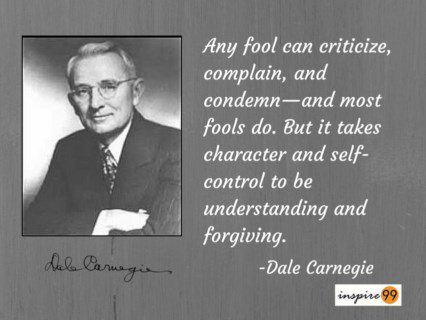
Disagreements can be uncomfortable, but they are crucial for personal growth. Embracing differing opinions fosters critical thinking and helps us challenge our own beliefs. As Dale Carnegie said, “Any fool can criticize, complain, and condemn, but it takes character and self-control to be understanding and forgiving.”
The Nature of Truth
Truth is often elusive, represented differently by both the hunter and the lion. Each perspective offers insights that can enhance our understanding. Recognizing that both viewpoints hold value allows us to appreciate the complexity of truth.
The Role of History
History is frequently written by the winners, glorifying their actions while neglecting the narratives of the defeated. This bias is evident in most history books, which celebrate the victors without acknowledging the consequences of their actions. To truly understand history, we must seek out alternative narratives and question accepted facts.
Investigating the Narrative
The key to a richer understanding of history lies in our willingness to investigate and question. Don’t take narratives at face value; dig deeper to uncover the layers of perception and bias.
The main theme of this quote – until the lion learns how to write is all about perception. It calls our attention to the various biases at play when we listen to or see something. The truth most times is a perception. The hunter has the capability to mould his words in such a way that it glorifies him. Be careful when you hear to the stories from different people – they might be hiding something very important and crucial.
Until The Lion Learns How To Write, Every Story Will Glorify The Hunter
Table of Contents
Until the Lion Learns How to write meaning
History is nothing but a bunch of stories. Even the ones we call facts are stories captured by someone else and there’s always a bias about how they are written. Apart from a personal bias, there is a bias created by the culture, the literature of the time in which it was written and the purpose of the writing. As you can see, there are already many variables about how a story is created.

Unfortunately in the context of a hunter and a lion – the lion is the loser and there is no one telling us the lion’s story. This already has a winner bias associated to it and cannot be treated as facts. Whenever we listen to something, it is our responsibility to identify the bias associated with it. This is particularly true when we are exposed to social media which talks about news or articles that are based on our following.
It means that we never get to see the other side of the story. A great starting point is to be aware that until the lion learns how to write, every story will glorify the hunter. There are 2 ways of looking at it:
It is easy to follow the herd and listen to the stories that are commonly told. This quote urges us to look beyond what we see and identify the stories which show a different point of view. This is where a certain level of growth can happen.
- The bias in the stories we listen
- The lion learning to write – i.e the story from the other side
History is always an opinion and this is often defined by the winner – ergo the hunter
It is also a fair reminder to us that until the lion learns how to write, we will fall prey to the stories of the hunters. So, maybe it is urging us to go out of our way and find opposing views. We can understand something only when we see both sides of the argument. Otherwise, it is just an opinion. We can’t take decisions based on opinion alone – it would be dangerous.

I love this quote because it talks about perception, truth and facts. I recently talked about Simon Sinek’s quote – Most truths are a perception – “The truth of most truths is that they are a perception”. No matter how objective we are, there’s always a bias that influences our documentation. As an intelligent listener, it is our duty to listen with a recognition that there will always be a bias associated with it.
Every story will glorify the hunter
There will always be a contention between the truth from the hunter vs that of the lion. Unfortunately, most of our history is written by the people who were commissioned by the ‘Winners’. Naturally, the history we see or know is biased to a certain extent. The only way, we can know the truth is when everyone has a voice.
Granted that social media is now offering a chance for everyone to speak. The Whistleblower laws even offer protection – but we should be aware that truth does get quashed at times. I think the most important thing for us to remember or even embrace is a difference in opinion.
Sometimes it feels strange to see passionate disagreements when they get personal. We might even be creating an echo chamber which is destructive to our personal growth as well. A difference of opinion is a great way to ensure that you have people who can challenge your thoughts. This challenge is not an attack but to enhance your thinking.
Truth is elusive – whether it is the hunter or the lion – they both represent only a perspective. One truth doesn’t categorically deny the other.
History is often written by the hunters and winners
In this quote – until the lion learns how to write, the truth is that history is often documented by ‘Winners’. If you look at most history books, they all glorify the winners of wars and how virtuous they were. Unfortunately, not many talks about the flip side. By now, we all know that there are always two sides to a story. The quote simply inspires us to think about alternate possibilities and investigate these to understand the real meaning.
The problem with most history is that we take it for granted. If we stop a little and investigate, this history might manifest into something richer. Ultimately, it is all about how our facts, truths and perceptions influence us. But we ought to be mindful and ask those pertinent questions before accepting something as an unquestionable fact. So, the next time while reading history or even current affairs, please take some time. Question the facts/perceptions because the truth is always lurking right around the corner.
“Until the lion learns how to write, every story, will glorify the hunter”
J Nozipo Maraire
Who said the African proverb until the lion learns to write?
Chinua Achebe, J Nozipo Maraire, and Anonymous are key contenders for this quote. It is hard to find the real source with so many competitors, but looking at the context, I’m inclined to lean towards the anonymous angle.
Most references to this quote I found are from African writers – perhaps makes sense because the quote symbolises oppression and also Lion as a natural reference to the country. Goodreads identifies J Nozipo Maraire as the author and perhaps that might be the first real reference I’ve come across. Please drop a comment below if you have any evidence that this needs to be attributed to someone else.
Regarding the author of the quotation, I’ve heard that before J. Nozipo Maraire was even born (1966), Chinua Achebe wrote this in his novel, titled Things Fall Apart, in 1958.
Thank you mate :). He he, I have a couple of history professors in my family too, even they tend to glorify the past as if it were some magic and like you said these people or kings were super human and stuff like that. I guess end of the day, they too were very simple people and some of them had a lot of pundits around them who wrote some very good lies :D :P
Coming from a family of historians I would say you have put words to my thoughts. I was often told your forefathers just muged up some dates and events . I often wanted to tell them that my folks tried to analyse the events to find causes and effects on humans rather than look at the superhuman side mentioned by court historians. A great post..
Thank you Rajeev..
Thank you Fayaz. I think that is where the entire truth lies – in our interpretation and the implementation to our lives and eventually what we would like to make out of it.
Thank you Deeshani.. True, I think any story we come across will just be a representation and there is no real way of knowing. I guess that is where our conscience and logic come into picture so that we make the most sense of the half information provided.
Very good sensible post!
Great post Vinay. It is indeed important that we ponder, evaluate and asses all perspectives before we speak or judge others.
I agree with the quote, every story has two sides or perhaps, many sides. It just depend on the perspectives. We will never come to know the complete truth behind it so it’s better leaving it to what it is. Great post, Vinay.