
How to take decisions: Making a decision often means cutting yourself off from other options and focusing your energy on a single path. But how can you navigate this process effectively? Here are some steps that might aid your decision-making journey.
Table of Contents
Practical Tips on How to take decisions
The process of decision-making can be daunting, but with these steps, you can approach it with confidence. Remember, every decision is an opportunity for growth. Embrace the journey! This breakdown shows 7 key steps on how to take decisions. The main thing with decisions is to ensure that you keep learning at each stage. You will not be perfect to start with. But, you will get closer, better and quicker with time. The best thing you can about decisions is to take, act on them and learn as a continuous loop.
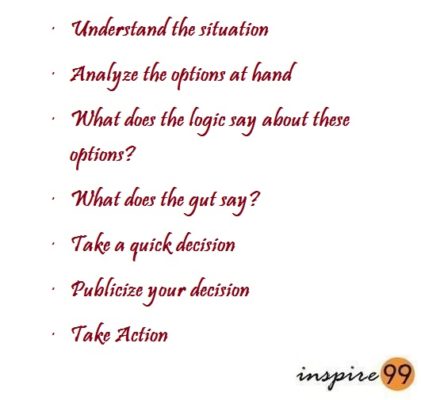
Understand the Situation
Before making a decision, take a moment to assess what the situation demands. What are the challenges at hand? Understanding the context will help you face the challenge more effectively.
Analyze Your Options
Consider the outcomes associated with each possibility. Research suggests generating at least three options. More than that can lead to confusion, while fewer options may limit your choices.
Evaluate the Logic
Examine each option critically. Which choice is most feasible given your available resources? Assess the risks involved and identify which alternative offers the greatest potential for favorable results.
Trust Your Gut
While logic is essential, don’t underestimate your intuition. What option brings you joy? If there’s a conflict between logic and intuition, lean towards what feels right for you. Most people will tell you to define the logic of decision making when you try to explain. They are right to do so. However, your gut instincts have developed for a particular reason. Sometimes you might not be able to explain your gut or instincts, but they might be telling you something. Instead of ignoring, try to explore it further, understand what it says before taking a decision.
Set a Deadline, Make a Quick Decision
Don’t hesitate. Even if your first choice turns out to be wrong, you can still adjust your course. Time is a valuable resource; prioritize making a decision quickly. To avoid overthinking, establish a firm deadline for when you will make your decision. This can help maintain focus and prevent procrastination.
You won’t get it right the first time. There will be mistakes, but as long as you are willing to learn and adapt, decisions will serve you better. The worst thing to do in decision making is to be stuck in the ‘Analysis Paralysis’. Time is a very valuable resource to ignore. Make it work for you by taking a good enough decision rather than a perfect one.

Publicize Your Decision, Seek Input from Others
Sharing your decision serves as a commitment mechanism. We often hold ourselves accountable to others more than we do to ourselves. By publicizing your choice, you reinforce your commitment. It helps to hold yourself accountable when people ask you how your decision is progressing. We tend to work better under pressure sometimes and publicising your decision helps achieve that healthy pressure.
Don’t hesitate to consult trusted friends or colleagues. They may offer perspectives you hadn’t considered, enriching your decision-making process.
Take Action
Action is the key to making any decision meaningful. Eliminate distractions and dive into execution. Remember, thoughts alone do not solve problems—actions do.
inspire99 : How to take decisions http://t.co/H0lbmqICi0