
4 Ds of time management: We can think of multiple frameworks about time management. I think the 4D’s framework of time management offers a simple yet powerful approach to organise time based on priority. The precondition to use 4 Ds of time management is that you know your priorities of the tasks which are important vs urgent. I would recommend using Eisenhower Matrix to organise time as a preparation to use this framework.
Time management as you know is a difficult task. The biggest challenge is to ensure that we can be strategic about it while ensuring that we are also responding to urgent needs that keep coming our way. If we are not intentional about using time to suit our needs and if we are not in control of this time – it can easily create confusions and ensuing havoc. Remember Jim Rohn’s quote:
Either you run the day or the day runs you – Jim Rohn
Table of Contents
What are 4 Ds of time management?
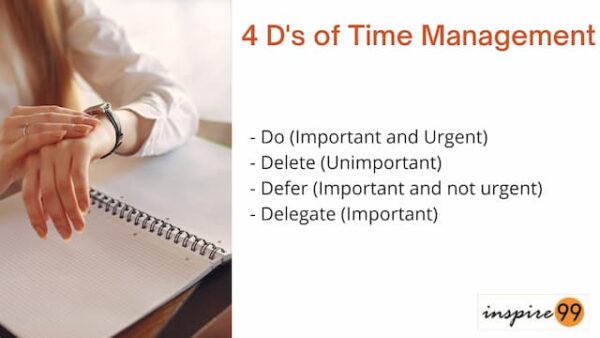
The 4D’s of time management was created by Jack Canfield in his book – The Power of Focus. This framework is to prioritise tasks and categorise them based on the best approach to get the most out of your time. The key theme in the 4Ds of time management is to ensure that we make the most of our time. Ultimately the purpose of time management is to ensure that you have adequate time for things that matter to you the most.
All of us can be busy, but the main question is – busy with what. Unless we use this time for things that are important to us, we are not in charge. This spirals into an uncontrolled use of time resulting in multiple inefficiencies. Before we know it, this can become an unhealthy habit making us lose control.
4 Ds of Time Management
The 4 Ds of time management tell us what to do depending on the type of task that we have. They are:
Do
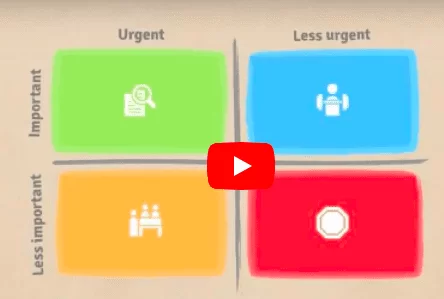
This strategy applies to tasks that are important and urgent. Remember the Eisenhower matrix: This is the first quadrant in the matrix that informs us about the tasks that need an action. They demand urgent attention and have a high impact and create results that mean a lot to you. Most of us don’t have an issue about working on these tasks because action is the most powerful thing to manage stress. Especially when we have things that are urgent and important – this is the best use of time.
So, if you want to start working on this right away, I won’t blame you at all. However, make sure that you spend enough time to plan your approach so that you can take control of these important tasks. The other thing to be mindful of is to break down this task and plan about it. An immediate action doesn’t mean that we must solve the problem in its entirety. We can choose to plan and do a part of it instead. There may even be parts of it that can be postponed
Delete
A big part of time management is to identify tasks that are unimportant. The difficulty most of us face is that there are some urgent tasks which pose as important ones. We must be very objective to identify if such a task deserves our attention. The task list is sacred. Each item in the task list must earn its place. Unless it passes our objective filter, it is not worth doing it.
We ought to be brutal and delete this task. If we find it too difficult to delete, we can postpone it so that we can tackle it another day. In my experience, if the deleted tasks are important enough, they will find a way to make it back to your list as a different task. So please feel free to be objective about such tasks and delete them from your list
Defer
Procrastination is often touted as the thief of time. One of the most valuable aspects of procrastination is to postpone things that are not important or urgent from a timeliness point of view. Most times we procrastinate tasks either because of their complexity, lack of motivation or incomplete information.
However, we can use procrastination to serve us. If the task is neither urgent nor important, we can consider postponing them for a different day when we have more information. We can even save some time involved in decision making so that we can have our peace of mind while procrastinating. In such circumstances, I’d challenge you to review whether procrastination can be your ally.
Delegate
Delegation is a powerful ally in time management. We tend to think that most tasks in our lists have to be done by ourselves. If we are clever about time management, we can take a managerial stance for time management and delegate tasks to someone else. We don’t have to delegate everything – we just must identify what we are good at and take support of someone else to complete it with good quality.
We must be mindful of the micro managerial tendency that says no one else can do the work at the same quality. Collaboration is a significantly powerful strategy that can give us better results than doing the task alone. We must be objective about the tasks and ask ourselves – is there someone else who can support me in doing this task better?
This means, ensuring objectivity over everything else. If we are objective, we can question ourselves about the purpose of a task, why it needs to be done by us compared to someone else doing it. It is all about being true to us and ensuring the focus on results. Saving time in this case is a powerful result if the outcome from the task is acceptable.