
Early in my first venture — a heritage tourism business in Mysore — I learned something that has stayed with me across every product and fundraising conversation since.
A story told well moves people. But something they can experience moves them differently.
When I started building Data Solver, a B2B SaaS platform for data governance, I discovered the same thing in a product context. Business plans and static presentations had their place — but the moment I put a wireframe or a clickable prototype in front of an investor or an early customer, the conversation changed. People leaned in. They pointed at specific things. They asked questions that showed they were imagining themselves using it rather than evaluating it from a distance. They wanted to spend time with it.
That shift — from presenting to experiencing — is what a clickable prototype makes possible. And with the tools available today, it’s more accessible to founders than it has ever been.
Table of Contents
What Is a Clickable Prototype?
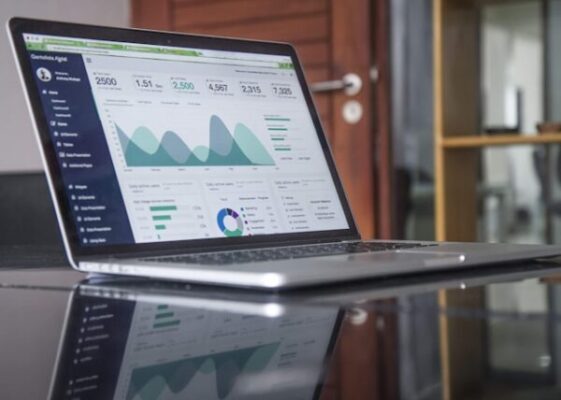
A clickable prototype is a visual, interactive representation of a product that simulates how it would work — without being fully built.
Unlike a static image or a slide, a clickable prototype can be navigated. A user can click a button and move to the next screen. They can follow a flow, make a decision, and see what happens next. It behaves enough like a real product that someone interacting with it starts to form genuine opinions about whether it works for them.
It doesn’t need to do everything a finished product does. It doesn’t need to connect to real data, process real transactions, or handle edge cases. It needs to be real enough to make the core experience tangible — to take something that exists as an idea and turn it into something someone can point at and react to.
That’s its entire purpose. And it’s a powerful one.
How Is It Different From a Wireframe or a Finished Product?
It helps to understand where a prototype sits on the spectrum of product development.
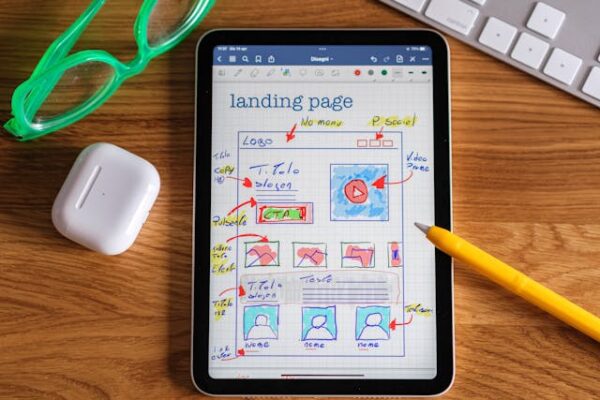
A wireframe is a static blueprint — boxes and lines that show the structure and layout of a screen without visual design or interactivity. It’s useful for mapping out information architecture and flows, but it requires imagination to bring to life. Most non-technical stakeholders struggle to visualise a finished product from a wireframe alone.
A clickable prototype adds interactivity to that structure. Screens are connected. Flows can be followed. It may or may not have visual design applied, but it behaves enough like a product that someone unfamiliar with product development can navigate it and form a view.
A finished product is fully built, connected to real systems, and handles the full complexity of real use. It represents the full investment of engineering, design, and product time. (Ref: Prototype, wireframe and a product)
The prototype sits between blueprint and product — real enough to create genuine reactions, without the investment of building the thing itself. That gap is where most of the valuable early conversations happen.
When Should a Founder Use One?
From experience across multiple ventures and fundraising conversations, there are three situations where a prototype consistently changes the outcome.
Investor conversations at the pre-product stage
When you’re raising money before a product exists, investors are evaluating your clarity of thinking as much as the idea itself. A prototype demonstrates that you’ve thought through the customer experience, the flow, the decisions a user makes — not just the concept. It makes the vision tangible in a way that a business plan or a deck simply cannot.
In my experience, the conversations that followed a prototype were fundamentally different from the ones that followed a presentation. People stopped asking “but how would it work?” and started asking “what happens when a user does this?” That’s the shift from abstract to concrete — and it’s the shift that moves conversations forward.
Stakeholder and co-founder alignment
Early in a venture, getting co-founders, advisors, and early team members aligned around a direction is one of the hardest and most important things to do. Everyone has their own mental model of what the product should be. Documents and presentations rarely surface those differences early enough to address them cheaply.
A prototype surfaces disagreement quickly and specifically. Someone can point at a screen and say “this isn’t right” in a way they couldn’t with a written description. That specificity is valuable — it means the conversation happens around something concrete rather than something everyone is imagining differently.
Early customer validation
Before committing significant engineering and design resource to building something, a prototype lets you test whether the core idea resonates with real customers. Not whether they say they like it — but whether they can navigate it, whether the flow makes intuitive sense, whether they understand what they’re supposed to do and why.
This kind of validation is most valuable when it’s done properly — with real users, with someone experienced in asking the right questions and interpreting the responses. A prototype that looks finished is not the same as one that has been properly tested. But it gives you something real enough to test with.
When Is a Prototype Overkill?
Not every situation calls for one. A few cases where the investment isn’t justified:
- Very early ideation — if the core concept is still forming, a prototype locks thinking down prematurely. A conversation or a rough sketch is often more useful at this stage
- When the audience is highly technical — engineers and technical co-founders often work better from written specifications or architectural diagrams than from visual prototypes
- When the flow is genuinely simple — if the product does one thing and the flow has one step, a prototype adds little over a clear description
The right question is always: what does this specific conversation need in order to move forward? A prototype is the answer when the answer is “something the other person can experience rather than imagine.”
How to Get One Without a Design Team
This is where things have changed significantly for founders in recent years.
AI-assisted design tools have made it practical to get to a clickable, navigable prototype without dedicated design resource — and without the time and cost that previously made this kind of work impractical at the early stage.
The quality of what these tools produce depends almost entirely on the quality of the brief you give them. A brief that works covers four things: who the customer is, what they’re trying to achieve, what role this prototype is playing, and what the strategic intent behind it is. The more specific that brief, the more useful the output.
For a detailed guide to getting the most from AI design tools in this context — including specific prompting techniques that make a significant difference to output quality — the full approach is covered here: How to Get Investor Buy-In for Your Product Vision (Without Long Documents)
The One Thing to Remember
A prototype is a tool for conversation, not a substitute for the hard work that follows.
The goal is to get into the room with something real enough that the people in that room can engage with it seriously — point at specific things, ask specific questions, and contribute to the direction rather than evaluate a finished proposal from a distance.
When that happens — when someone leans in, clicks through a flow, and says “this is what I meant” or “this isn’t quite right” — the prototype has done its job. Everything from that point is about what you do with what you heard.
That’s the value founders who use prototypes well have always understood. The tools have changed. The principle hasn’t.